2026-10-02 ·
Porta Potty Placement Tips For Construction Sites Near The Port Of Stockton
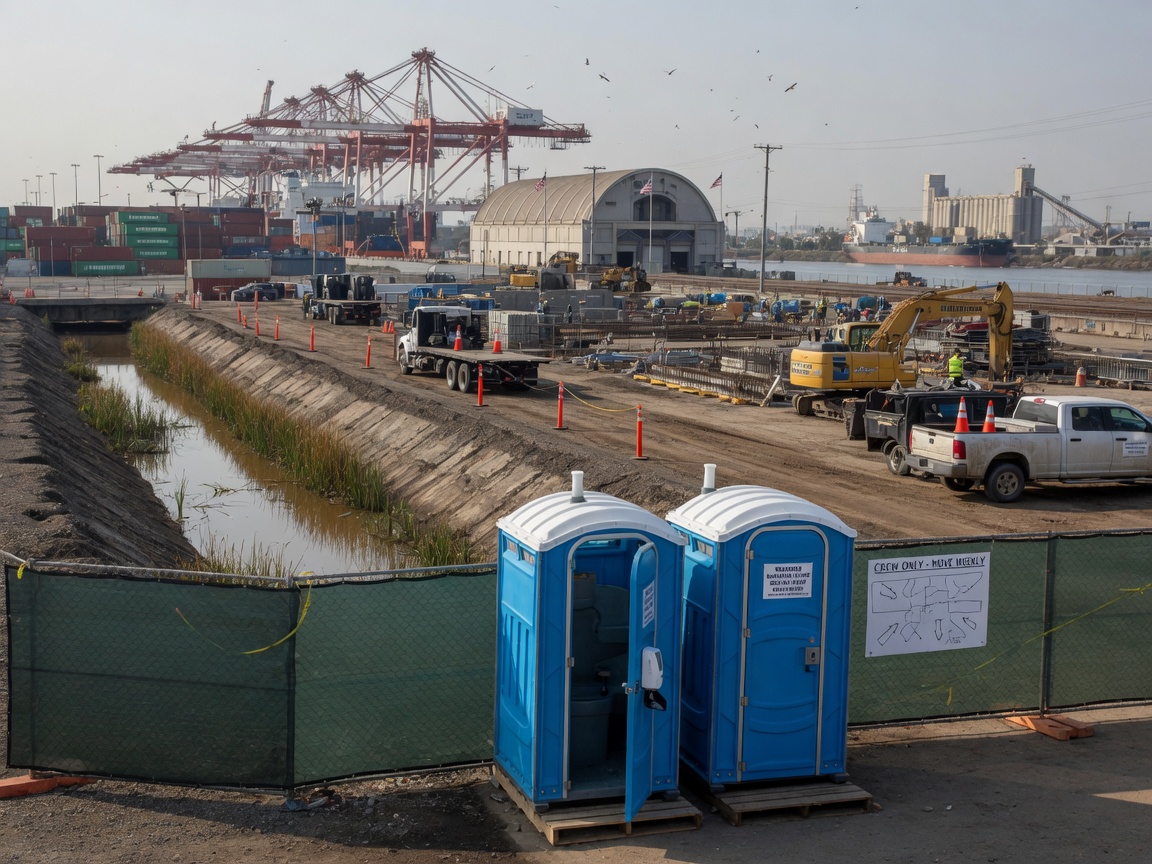
Effective porta potty placement on construction sites near the Port of Stockton starts with positioning units within 150 feet of active work zones while ensuring truck access for weekly servicing from 11 S San Joaquin St. Sites along the Stockton Channel often feature compacted gravel pads and rail spurs that limit maneuverability, so units must sit on level ground away from heavy equipment paths to avoid tipping or blocked doors during peak shifts.
Evaluating Terrain and Access Near the Port of Stockton
Construction sites around the Port of Stockton sit on reclaimed industrial land with uneven fill and occasional soft spots from the San Joaquin River delta influence. Place units on compacted pads at least 10 feet from excavation edges to prevent settling during rains common in the hot-summer Mediterranean climate. Crews working near rail lines need units set back from tracks so service trucks from our Stockton base can reach them without crossing active spurs. In West Stockton industrial zones, narrow access roads mean selecting spots that allow a service vehicle to back up and empty tanks without blocking material deliveries. Lincoln Village edge sites often have more open lots but still require clear sight lines for nighttime security.
Accounting for Local Climate and Wind Patterns
Stockton summers push temperatures above 100 degrees, so units near the Port need placement that captures prevailing breezes off the Stockton Channel without direct sun exposure on the door side. Hot-summer Mediterranean conditions dry out waste faster, increasing odor if units sit in stagnant corners blocked by shipping containers. Winter brings occasional tule fog and light rain that turns gravel into mud, making it essential to elevate units slightly on pallets where water pools near the channel. Nearby Lodi and Manteca sites share similar wind patterns, but Port locations face extra salt air that can corrode metal components faster if units are not rotated regularly. Linking to our guide on keeping units usable in Stockton summer heat shows how shade cloth and extra ventilation cut complaints during July and August peaks.
Meeting Accessibility and Quantity Needs on Industrial Sites
ADA compliant porta potty rental units must sit on firm, level surfaces with at least 5 feet of clear approach space for wheelchair users, a common requirement on Port projects that draw mixed crews. Standard porta potty rental units work for most daily crews of 20-40 workers when placed in pairs near break areas and material staging zones. Count one unit per 10 workers for shifts longer than 8 hours, adjusting upward if the site spans multiple acres along the channel. Downtown Stockton construction often shares the same San Joaquin County permitting rules, so early coordination with inspectors avoids relocation costs after setup. See our standard porta potty rental page for details on models suited to these industrial conditions.
Coordinating Service Routes and Long-Term Placement
Service teams operating from 11 S San Joaquin St reach Port sites fastest via the Crosstown Freeway, so placement should keep units visible from main gates for 7am-10pm response windows. Long-term projects benefit from rotating units every 60-90 days to prevent ground staining on older asphalt pads common in the area. Avoid clustering all units in one corner, which forces workers to walk farther and increases cross-traffic with forklifts. Manteca crews sometimes share routes, but Port traffic patterns require dedicated scheduling to match barge unloading cycles. Our deluxe porta potty rental options add hand-wash stations that stay cleaner when positioned near shaded break areas rather than open lots exposed to channel winds.